


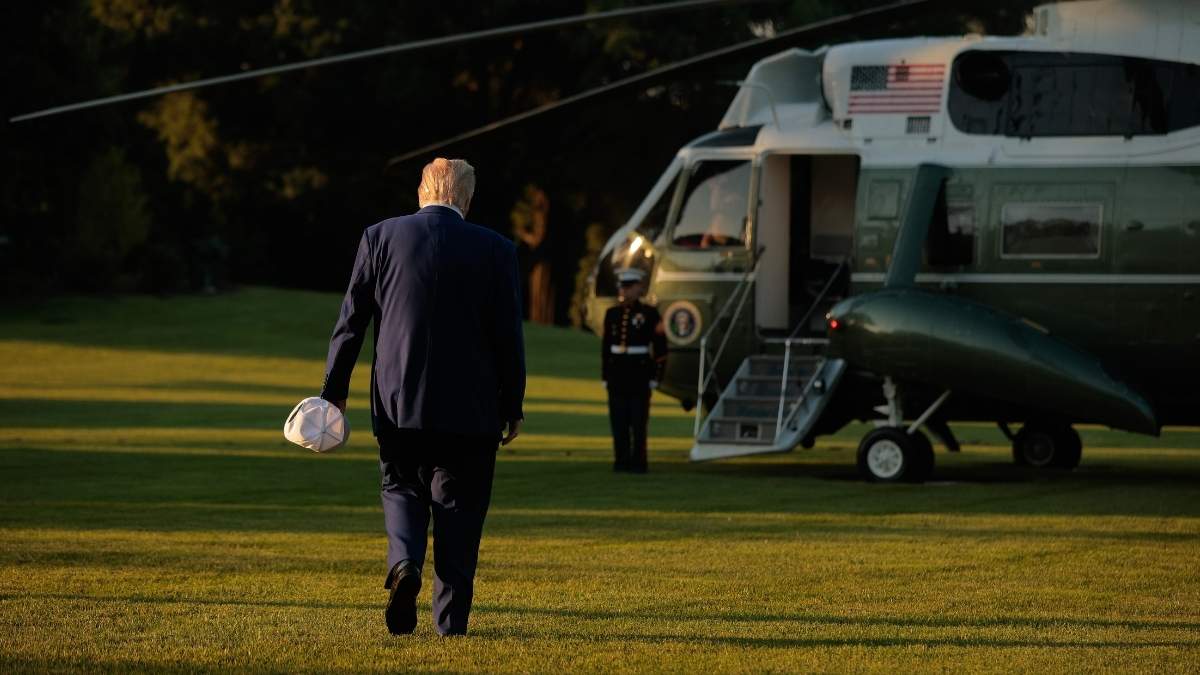
As the United States and Israel launch massive military strikes against Iran, and Iranian state media report the death of Supreme Leader Ayatollah Ali Khamenei in the opening barrage of Operation Epic Fury, policymakers and pundits are offering competing narratives about why this war is justified.
Including me and my contribution to Sunday’s March 1st NOS Nieuwsuur broadcast.
De Nederlandse versie van dit artikel lees je hier: Gezien hun geschiedenis in Iran nemen de Verenigde Staten een groot risico
President Trump argues that the attack was launched because Iran presented an imminent threat to the U.S. homeland. Not only has Trump not provided any evidence for this line of argument, but he and his cabinet appear not to understand the risks that they are taking.
A careful analysis of the situation and putting the attack into a broader context of past U.S. foreign policy, especially its record on regime changes and the result of its prior conduct in the Middle East, in particular its prior conduct with Iran, suggests that unintended consequences are more likely than not.
Why is Trump attacking
If the argument that Iran is an imminent threat is dubious, then why is President Trump going down this road in the first place? Several other rationales make the move more plausible. First, at the moment, Iran appears strategically weakened.
Its regional proxies, Hamas and Hezbollah, suffered significant setbacks, and internal dissent and economic pressures reduced Tehran’s leverage and influence in the region. That perception of vulnerability creates what the pro-attackers see as a rare window of opportunity.
Trump’s growing confidence in military force
Second, prior limited strikes against Iranian nuclear facilities in June of last year, which were short and executed without U.S. casualties, furnished Trump with the impression that he would have an easy win—that Iran would not retaliate and escalate.
Third, and relatedly, Trump is still basking in the political momentum generated from his comparatively low-cost operation of extracting Nicolás Maduro in Venezuela. The same bump in confidence that resulted in his attempted Greenland commandeering.
Plus, the foreign-policy win in South America reinforced Trump’s belief that bold actions can yield quick results.
Shifting attention away from domestic problems
The fourth factor that must be taken into account is the domestic political pressures currently buffeting the Trump presidency.
The pervasive affordability crisis, his contentious immigration enforcement, his plunging approval ratings, the ascendant reality of losing the midterms big time and ongoing political controversies over the Epstein Files create incentives to shift the national conversation toward perceived strength abroad.
In the future, scholars will have a heyday using the Diversionary War theory to analyze the many domestic challenges that Trump is trying to run away from in starting his “war of choice” on Iran.
None of these factors requires a grand conspiracy to explain the Trump administration’s thinking; they reflect a mix of strategic opportunism and political calculation. The danger, of course, is that wars launched under such assumptions rarely unfold according to plan.
If you don’t know where you’re going, any road will take you there
Not only are the reasons offered by Trump and his close associates disingenuous, but their decision-making process to go to war is prone to making mistakes.
Trump does not have a functioning National Security Council with a dedicated National Security Advisor who leads an interagency process that systematically games out alternatives, weighs risks, and presents structured options to the president.
For one, Marco Rubio has too many jobs to function in this traditional way. Instead, as a recent Vanity Fair profile of Chief of Staff Susie Wiles revealed, she keeps a monitor in her West Wing office specifically to track Trump’s Truth Social posts, allowing staff to respond immediately to his impulses. Add to this that those close to Trump owe their positions because of loyalty rather than any experience they bring to the office.
Loyalty to Trump is what matters
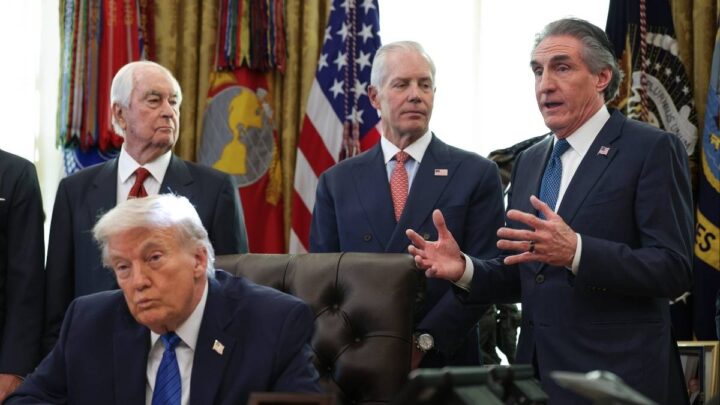
Even serious cabinet members, such as North Dakota Governor Doug Burgum, have publicly humiliated themselves in televised sycophantic cabinet meetings. Such an environment discourages rigorous debate and incentivizes instant alignment with a president’s latest public pronouncements, hardly the conditions for sober, strategic foreign policy that contemplates war.
False hopes that military force can engineer political outcomes
If this is the process that got the U.S. to start a war with Iran, we can be sure that the risks were not properly vetted. For example, America’s recent experiences with regime change show that it often produces chaos, instability, and unintended consequences.
Barack Obama’s 2011 NATO-backed intervention in Libya that toppled Muammar Gaddafi with the promise of liberation, instead plunged the country into civil war, militarized fragmentation, and enduring insecurity.
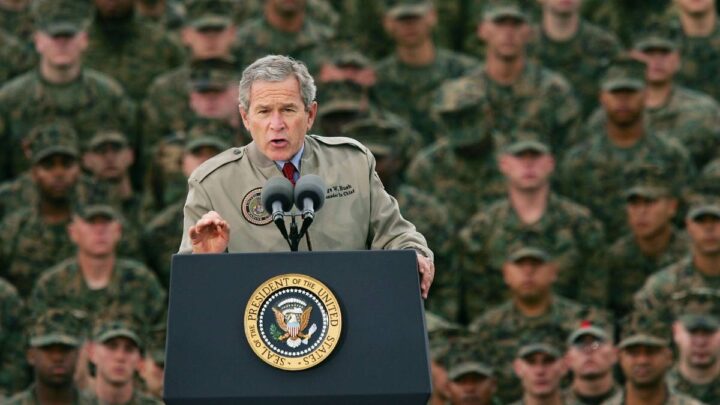
George W. Bush’s 2003 removal of Saddam Hussein unleashed ISIS and sectarian conflict with long-lasting U.S. and regional repercussions.
And let’s not forget that even after twenty years, the U.S. could not make a viable state in Afghanistan after the Taliban was removed from power.
Trump’s call for Iranians to rise against their leadership is also hazardous. Not only are the men who slaughtered at least 20,000 Iranian demonstrators in January still in possession of their guns, but a similar call by George H. W. Bush in 1991 for Iraqis to overthrow Saddam Hussein was followed by the massacres that filled the mass graves uncovered in Iraq in 2003.
Misconceptions and Iran
If the U.S. has a bad history with policies of regime change, what about its history with Iran? In fact, America has a long history with Iran—one of interference, covert action, and Cold War fears—that produced 46 years of severed relations, a deep sense of Iranian defiance and waves of blowback that hardened Iran’s anti-American posture.
Rather than bring stability to Iran, the region and oil prices, Operation Ajax, the 1953 CIA and MI6 coup, instead created a core grievance that shaped Iranian political identity for generations and added fuel to the 1979 Iranian Revolution.
Thus, from a historical perspective, this war does not make sense. But it also misperceives what war with Iran might look like.
The last leader who saw a window of opportunity to attack Iran when it was weak, instead got himself an extended war. In 1980, assuming that the post-revolutionary chaos in Tehran had rendered Iran militarily vulnerable, Saddam Hussein launched an invasion with the expectation of a quick victory.
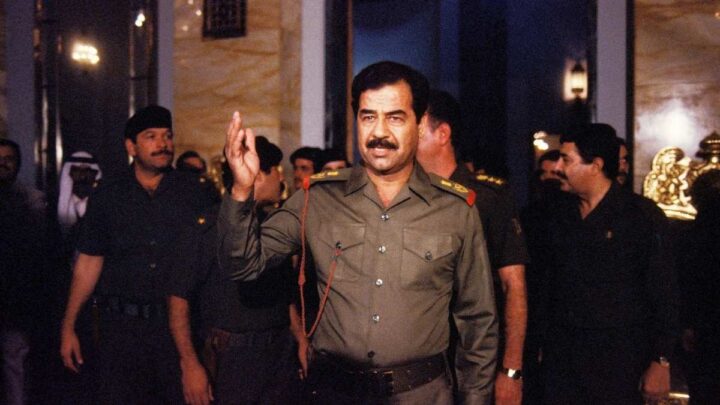
But Saddam misjudged both the nature of Iranian nationalism and the limits of his own intelligence. Even though revolutionary purges in 1979 had gutted Iran’s officer corps, executing 85 senior generals, Iran mounted a fierce defense.
Instead of a swift victory, Iraq waged an attritional eight-year war that cost millions of lives.
Beware of quagmires and Forever Wars
The United States today is not the Iraq of 1980 or even the U.S. of 1953, but were the risks of an attack on Iran fully gamed out? Were scenarios that took historical realities of the would-be opponent taken into account?
The fact that even after the theocratic regime in Iran had decimated its own military after the 1979 revolution still managed to repel a foreign invasion, should have been included in any war discussions.
The chaotic aftermaths of regime change in Libya and Iraq are also equally important cautionary tales. Foreign policies that are not well thought out have a history of ending badly.
And, although history does not always repeat itself, it should not be denied either. If policymakers fail to account for Iranian resilience, the past consequences of foreign intervention, and the unpredictable dynamics of regime change, they are likely to find, as Saddam Hussein did, that nations are not so easily kicked while they are down.